Charlotte’s Web Revisited
by Ira Sukrungruang | This lovely world, these precious days.
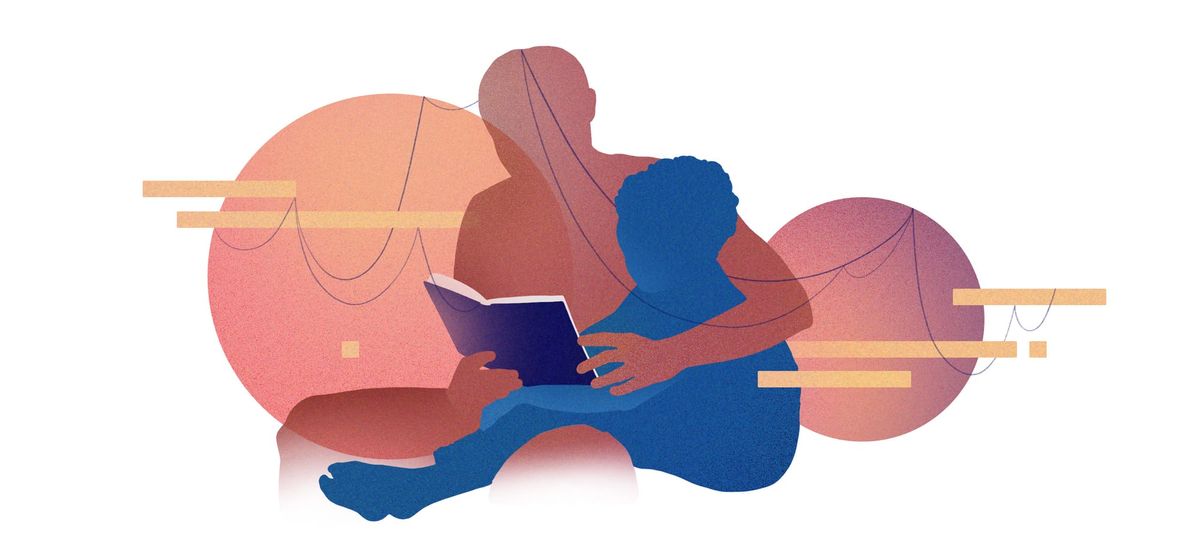
You haven’t read the book in forty years, and now, your three-year-old son, nestled in between his mother and you, waits for the story. His emergence into the world allows you visitation to your own childhood, remembering the boy you were in the mirror of your son’s daily life. When he talks to the bees, you remember talking to the bees. When he sings and dances to his favorite band, BTS, you remember singing and dancing to your favorite musician, Michael Jackson. In him, a repeated pattern of experience.
How easy it is to be swept away by the world of the book. How easy it is to forget who you are now—a writer and father and husband—and become that boy you once were, feeling what that boy felt when he first read the book, the first book he read himself. You remember that boy and his loneliness. His shyness made him quick to cower into corners like a scared dog during a thunderstorm.
Like you, your son is easily moved by words, is quick to still when a story is being told. He doesn’t disrupt your reading, leaning his head on your shoulder, his breath tickling your ear, listening with full attention.
At the end of a chapter, you ask if you should stop. “Go on, go on,” he says, though his voice is tired with sleep. So you read and read and read. Until he tells you he can’t keep his eyes open and he burrows his face into your chest and you immediately feel his breathing change, the soft whoosh of his open-mouth snore.
The next night you pick up where you left off. When Charlotte dies, the boy you once were appears again. He’s there. Wet-eyed. The lump in his throat grows, hard and woody, like an avocado seed. You cough to break it down.
Your son stiffens against you. He clutches your arm hard. Barely breathing.
“What happened?” he says.
You remember how you reread the passage a few times in disbelief, thinking you must have read wrong because you weren’t a good reader yet. But you didn’t read it wrong then, and you don’t read it wrong now.
“She can’t be,” your son says. “She’s just faking.”
And then the quiet that follows. In that quiet, a storm.
As a boy, you cried that night. Quietly, so you wouldn’t wake your parents. This was your first complicated cry. It was not a cry of a scraped knee or the disappointment of not getting the teddy bear you wanted. This was a cry that was for someone beyond yourself—a talking spider, a loyal friend—a cry that recognized the fragility of the world and that everything has a beginning and an end and, you hoped, another beginning. You didn’t have the language for this yet, but you felt it, felt it in the streams trickling down the chub of your cheeks, the distortion of lamplight that filled your childhood room, the sink in the chair’s cushions as if you were about to plummet down a hole.
The boy next to you now, your son, doesn’t cry. He remains still, his warmth pressed into your arm.
“Are you OK?” you say.
“I’m OK,” he says.
“Do you want me to keep reading?”
“Keep reading, Daddy.”
“Are you sure?”
“This isn’t where things end,” he says.
It isn’t. He’s right. He usually is.
Your son is not you. He loves the book as you did, but he loves it in his own way. He is becoming his own person. The sadness that followed the boy you were is not the sadness that will follow him, though sadness follows everyone. You do see your childhood in him, see it in the black luster of his hair, in the smile your wife says is your smile. Yet, your boy is not making you relive your childhood. He is making you reimagine it, recreate it, and within this new space, another world opens.
When you finish the book, your son says, “That was a good book, Daddy.”
“It was, wasn’t it.”
He nods. “What’s next?”
Ira Sukrungruang is the author of the memoir This Jade World and the forthcoming essay collection Under and Up: Fatherhood and Fear in the Age of Distrust. He teaches creative writing at Kenyon College. You can find more information about his work at buddhistboy.com and on his Instagram, @sukrungruang.
This essay is a Short Reads original.