Sunlight
by Robin Mayer Stein | And shadows.

Everything was shiny in Aunt Jeanne and Uncle Jimmy’s apartment on Sutton Place: the large mirrors, the silver teapot, the tall windows. Over the sofa, there was a large painting of Aunt Jeanne in a low-cut white dress. The scent of roses filled the air.
My sister and I wore striped lavender and white dresses, white anklet socks, and black patent leather shoes. We had dressed up for the occasion. We perched on the edge of our small armchairs. My father tapped his hand on the arm of his chair. My mother twisted her bracelet back and forth on her wrist.
“This is Robin. She is ten,” my father said, introducing me to these relatives we rarely saw. I felt as if I should curtsy, but I just smiled. “And this is Wendy, she is seven,” my mother said.
Framed by the window, my sister looked like a delicate doll, her thick blonde hair tied back with a ribbon, her green eyes flashing. She held a sugar cookie in her hand but didn’t take a bite. I didn’t take a cookie, preferring to keep my throat clear. I needed to speak my part when the time came.
I was supposed to tell Uncle Jimmy and Aunt Jeanne about my schoolwork, my dance and piano lessons. I had been prepped to paint a rosy picture of our family life on a tree-lined street in Queens where city buses rattled along, chrome glinting.
This was not a simple visit; it was more like an audition. Would we pass muster? Would Uncle Jimmy give my father the money we needed? At ten, I felt sure it all depended on me, though I can see now that was hardly fair. I did not know that Uncle Jimmy, the eldest of a family of eleven children, had made his fortune importing Herend porcelain from Hungary and selling the hand-crafted animal figures to collectors in the States. I did not understand how my father, the tenth child, twenty years younger than Jimmy, had struggled to find his own place in his family and in the world. I knew only that I was prepared to speak to my uncle.
My father and Uncle Jimmy were deep in conversation. My mother and Aunt Jeanne chatted softly. As the grown-ups talked, my eyes scanned the scene. Small statues of cats, rabbits, and birds stood on tables. In this room of plush carpets and hushed voices, how would I speak?
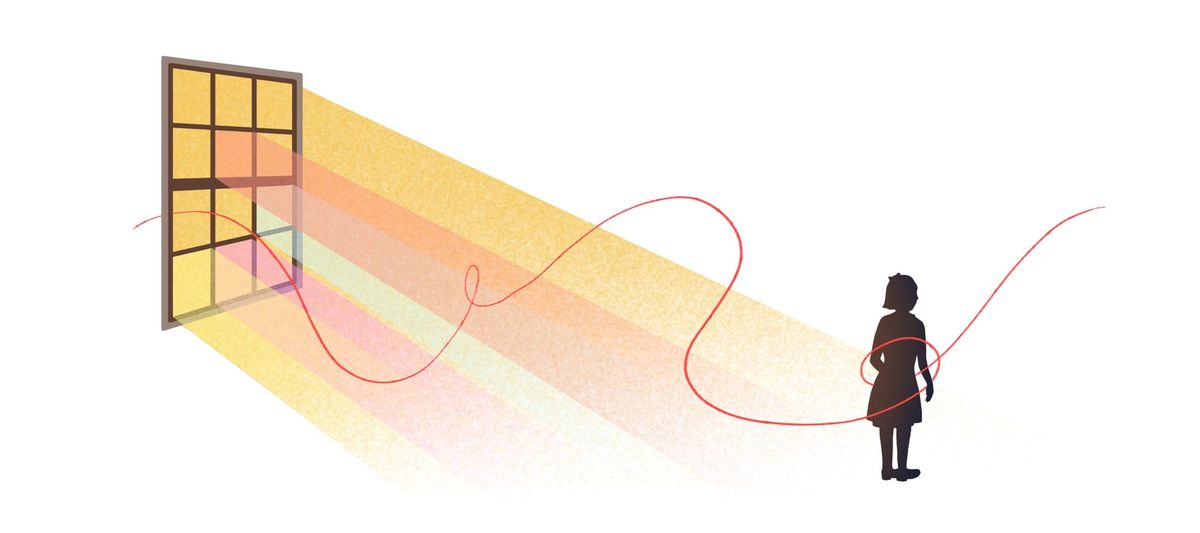
A square of sunlight glowed on the rug. I wanted to fade into that patch of light but I knew that much depended on me. The clock chimed two times. My mother smiled and nodded.
I cleared my throat and prepared to speak. I did not say, “Mom and Dad fight a lot and she wants a divorce.” I did not say, “We have an old car that breaks down a lot.” I did not say, “I know that you are rich and we are not.”
I said, “I take piano lessons and modern dance. I like to read and write. I’m a very good student.” My mother had told me to say those things, and I performed admirably. I loved acting in plays and having an audience.
Uncle Jimmy stared at the painting over the fireplace, coughed slightly, and said, “Lovely, lovely.” He might have been speaking about me or about Aunt Jeanne’s portrait. I couldn’t tell. “Take a cookie, dear,” he said, but I did not.
Aunt Jeanne said, “You are a talented girl, Robin. When you turn fifteen, I will take you to France, to Bretagne, to the fishing village where I grew up. You will love it there.”
My heart soared. A trip to France, how marvelous! I looked around to see what the others thought of this invitation. My sister crossed and uncrossed her ankles, my father stared at the mauve carpet, and my mother gazed out the window as if she wished she could escape.
After a few minutes, my father said, “We should be going.” My sister stood and scooped up a small cat statue. She rubbed it gently and held it up to the light. My mother, her face pale, said, “Give me the kitty, Wendy. It’s not a toy—it’s for decoration.”
Panic rose in my chest. What if my sister broke the cat and ruined everything? I had worked so hard to say my piece. But she gave it to my mother. We all moved toward the door as if we had rehearsed our exit.
Uncle Jimmy said, “Your daughters are charming. I will be in touch.” We said goodbye. There were no hugs or embraces. We waited for the elevator in silence. In the dark lobby, the doorman, in a crisp blue uniform, held the door and ushered us out.
When we emerged from the building, the harsh sun stung my eyes. “In five years, I’m going to France with Aunt Jeanne,” I told my mother.
“We’ll see about that,” she said. “You were very grown-up today.” She gave my hand a squeeze. I shaded my eyes with my other hand and saw Wendy strolling with my father half a block ahead of us.
“They could have given us a little animal as a present,” I said.
“Those figures are very expensive,” said my mother. “They are not toys for children.”
My head swirled with thoughts of money, brothers, and trips to France—so many things I did not yet understand. Brothers would not always remain friends. Money matters caused sharp rifts in families. As for France, I would travel there on my own years later, when I was twenty-five, but only to Paris, not to Aunt Jeanne’s village in Bretagne.
I pulled away from my mother and ran ahead to my father.
“Daddy, wait,” I called. He turned to me and smiled.
Robin Mayer Stein has published fiction and poetry in 50 Give or Take, The Paterson Literary Review, Persimmon Tree, The Haikuist, and Fiddlehead Folio. She received a poetry grant from the Massachusetts Cultural Council and was twice a winner of Haiku Newton. She leads memoir and poetry workshops and offers school programs about her book, My Two Cities: A Story of Immigration and Inspiration. She loves swimming, Scrabble, and hydrangeas. You can reach Robin at robinsteincreative.com or on Facebook.
This essay is a Short Reads original.